


AI Content Ideas for Blogs, Social Media and Newsletters
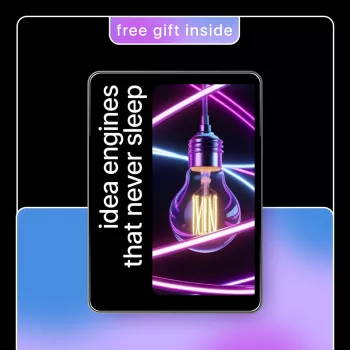
Fresh ideas can be hard to find when your blog, social media, and newsletter all need attention. Idea Engines That Never Sleep is an ebook guide for creators who want a more practical approach to finding topics with AI assistance. We’ll walk through a simple way to generate possibilities, choose the strongest ones, and adapt them for different channels.
Turn a Blank Content Calendar Into a Starting Point
A blank calendar doesn’t mean you have nothing useful to say. It may mean you need a different way to approach the questions your audience already asks. An AI tool can suggest angles you might not have considered, from a beginner’s guide to a comparison, checklist, or personal lesson.
The ebook is a guide to smart topic generation, not an AI tool itself. You’ll still need to choose and use a separate tool if you want AI-generated suggestions. Treat its output as raw material rather than a finished editorial plan.
Your judgment matters most. You know your audience, your experience, and what you can realistically explain. Check factual claims before publishing, and make sure each idea offers something useful rather than repeating a generic suggestion.
Shape Ideas Around Your Audience
Start with three details: who you want to reach, a question they regularly ask, and what you want the content to accomplish. For example, you might want to help new creators plan a week of content without spending an entire day on it. That gives you a clearer direction than simply asking for more post ideas.
Ask an AI tool for several angles on that question. You could request a practical guide, a common-mistakes list, and a short personal-story idea. Compare the results instead of accepting the first suggestion, then refine the most promising option with your own knowledge.
Our team recommends using three filters when you shortlist topics:
- Relevance: Does the idea answer a real audience question or support a clear goal?
- Distinctiveness: Can you add an example, perspective, or experience that makes it your own?
- Practicality: Do you have the time and information needed to produce it well?
An idea that passes all three tests is a stronger candidate than one that sounds clever but offers little value or requires research you cannot complete.
Adapt One Idea Across Three Channels
You don’t have to invent a completely new subject for every platform. Start with one audience question—such as “How can I plan a week of content?”—and adjust the answer to suit each channel. The following table illustrates one possible workflow; it is not a description of material included in the ebook.
| Channel | Example angle | Next step |
|---|---|---|
| Blog | A practical guide to planning a week of content | Expand the idea into clear steps |
| Social media | One quick content-planning tip | Invite readers to share their approach |
| Newsletter | A short lesson from a planning routine | Link to a relevant longer resource |
Give the blog enough depth to help someone complete the task. Keep the social post focused on one useful takeaway, and use the newsletter to add context or a personal observation. Each format can point readers toward a different next step without repeating the same text.
This approach also works for a specific product category. If your audience asks how to develop a dining-room inspiration post, you might build a longer article around lighting ideas and feature an Art Deco-inspired crystal branch chandelier as one example. A social post could focus on one lighting consideration, while a newsletter could share a brief planning lesson. Keep any product details accurate and relevant to the audience’s question.
Build a Repeatable Idea Routine
Set aside a regular block of time to generate, shortlist, and refine ideas. A weekly session can be as simple as reviewing audience questions, requesting a few angles, and choosing one topic for further development. The goal is not to fill every calendar slot immediately; it’s to maintain a small reserve of useful possibilities.
Keep a simple list with the audience question, the proposed angle, the channel, and any research you need to complete. Add notes when readers respond or ask follow-up questions. Over time, those notes can reveal which subjects deserve a deeper guide and which are better suited to a short update.
Before publishing, verify factual claims against reliable sources and review the work for originality and audience fit. Google’s guidance on AI-generated content emphasizes useful, people-first material, while the NIST AI Risk Management Framework provides a broader resource for thinking about AI risks and responsible use.
Explore the Guide
If you want help approaching AI-assisted topic generation, explore our Idea Engines That Never Sleep ebook. It is in stock and listed at $17.98 USD. Visit the product page for current purchase details, and use the ideas you develop as a starting point for your own editorial decisions.
FAQ
What is the best AI tool for creating content ideas?
There is no single best tool for everyone. Compare ease of use, cost, the kinds of topics you need, and how well suggestions fit your audience; Idea Engines That Never Sleep is an ebook guide, not an AI tool.
Can AI suggest topics for blogs, social media, and newsletters?
Yes. AI tools can suggest angles for each format when you provide an audience and a clear request. Review and adapt the suggestions before publishing.














Leave a comment